To achieve management success, you need to master various cost accounting methods. Utilizing standard costing helps you set performance benchmarks, while marginal costing clarifies profitability at different production levels. Activity-based costing (ABC) directly connects costs to specific activities, offering detailed understandings.
Direct costing focuses on variable costs for clear profitability assessment. Absorption costing considers both fixed and variable expenses, ensuring thorough pricing strategies. Each method addresses distinct business needs, enhancing decision-making and resource optimization. As you investigate these methods, you’ll uncover strategies to mitigate challenges and drive improved financial performance.
Key Takeaways
- Implementing Activity-Based Costing provides detailed insights, linking costs to specific activities for improved decision-making and efficiency.
- Standard Costing establishes performance benchmarks, allowing for effective cost control and evaluation against set targets.
- Utilize Marginal Costing to analyze variable costs, aiding in profitability assessments and strategic pricing decisions at different production levels.
- Absorption Costing ensures comprehensive cost allocation by including both fixed and variable costs, enhancing pricing strategies and profitability analysis.
- Adopting Lean Accounting minimizes waste and optimizes processes, fostering a culture of efficiency and cost-effectiveness in management practices.
What is Cost Accounting?
Cost accounting serves vital objectives, such as enhancing cost control, improving operational efficiency, and supporting strategic decision-making. Unlike financial accounting, which focuses on reporting overall financial performance to external stakeholders, cost accounting provides perspectives into the internal cost structure and resource allocation of a business. Comprehending these distinctions and objectives is essential for effectively managing costs and driving profitability.
What are the key objectives of cost accounting?
Comprehending the key objectives of cost accounting is essential for any organization striving for financial efficiency and strategic management. The primary objectives of cost accounting include cost allocation, which helps in determining the actual cost of products and services. This perspective enhances management decision-making by providing a clear comprehension of cost behavior analysis.
Additionally, it supports efficiency improvement and resource optimization, enabling you to identify areas where costs can be reduced without sacrificing quality. The advantages of cost accounting also extend to developing effective pricing strategies, ensuring that prices reflect true costs and market conditions. Ultimately, these objectives contribute significantly to better financial performance, allowing your organization to thrive in a competitive environment.
How does cost accounting differ from financial accounting?
While both cost accounting and financial accounting are vital for a business’s overall financial health, they serve distinct purposes and audiences.
- Cost accounting focuses on internal decision-making, helping managers grasp cost structures, direct costs, indirect costs, and overhead costs.
- Financial accounting is aimed at external stakeholders, adhering to accounting standards to present an overall financial overview of the business.
- Cost accounting methods, such as activity-based costing, provide detailed perspectives for cost control, whereas financial accounting summarizes financial performance over time.
In essence, the difference lies in their focus: cost accounting zeroes in on internal efficiencies, while financial accounting emphasizes external reporting and compliance. Comprehending this cost accounting vs financial accounting distinction is significant for effective management and strategic planning.
What are the Main Methods of Cost Accounting?
When exploring the main methods of cost accounting, you’ll find that standard costing, marginal costing, and activity-based costing (ABC) each provide distinct advantages for managing expenses.
Standard costing sets benchmarks for performance evaluation, while marginal costing helps you understand cost behavior and profitability. ABC, on the other hand, offers a detailed approach by linking costs directly to specific activities, enhancing pricing strategies and resource allocation.
What is standard costing and how is it applied?
Standard costing is frequently employed in cost management to establish predetermined cost benchmarks for various inputs such as materials, labor, and overheads. This method allows you to compare actual costs against these standards, facilitating effective cost control and performance evaluation. Here’s how it’s applied in practice:
- Fixed and Variable Costs: You categorize costs into fixed and variable components, helping to understand their impact on the production process.
- Cost of Goods Sold: By analyzing variances, you can assess the cost of goods sold and identify areas for improvement.
- Strategic Decision-Making: Standard costing enhances your ability to make informed decisions regarding resource allocation and production efficiency.
Utilizing this cost accounting method can significantly enhance your organization’s financial performance.
What is marginal costing and what are its benefits?
Marginal costing, also known as variable costing or direct costing, focuses on the analysis of variable costs and their impact on decision-making in production processes. By classifying costs into fixed and variable components, it helps you understand cost behavior and how it influences profitability. Marginal costing allows you to calculate the cost per unit effectively, aiding in resource allocation decisions.
This method is particularly beneficial when you’re analyzing the profitability of specific products or services, as it highlights the contribution margin. Additionally, it supports financial management by providing clear observations into how changes in production levels affect overall costs. Ultimately, using marginal costing as a cost accounting method enables you to make data-driven decisions that enhance organizational efficiency and profitability.
How does activity-based costing (ABC) work?
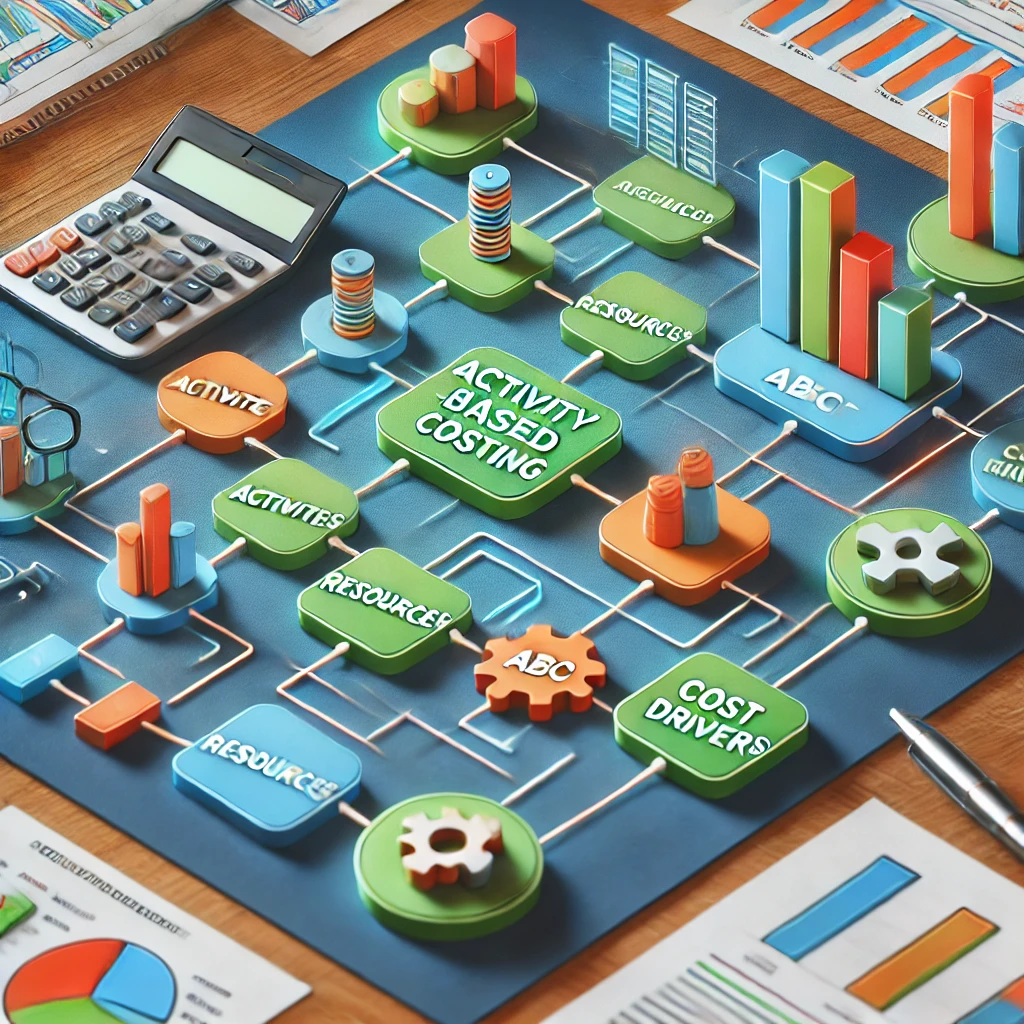
Activity-Based Costing (ABC) operates by assigning costs to products and services based on the actual activities that contribute to their production. This cost accounting method enhances your comprehension of cost fluctuations by providing detailed observations into their cost structure. By utilizing ABC, you can:
- Identify specific activities that drive costs
- Determine the cost of goods more accurately
- Calculate the cost of each product based on resource consumption
What are the Various Types of Costing?
When exploring the various types of costing, it’s essential to understand direct costing and its influence on decision-making, as it only considers variable costs. Absorption costing, in contrast, incorporates both fixed and variable costs, which can significantly affect pricing strategies.
Additionally, distinguishing between variable and fixed costing helps clarify how each approach impacts financial reporting and profitability analysis.
What is direct costing and how does it impact decision-making?
Direct costing, often referred to as variable costing, focuses on the costs that vary directly with production levels, allowing businesses to assess profitability with greater clarity. By applying this cost accounting method, you can make informed decisions based on the marginal costing principle. Comprehending cost behavior helps you differentiate between fixed and variable costs while evaluating the total cost of a product.
Here are key impacts on decision-making:
- Enhances clarity in profitability analysis.
- Aids in identifying the cost of a product accurately.
- Supports strategic cost management initiatives.
Using direct costing in financial management equips you with knowledge necessary for effective decision-making, nurturing an environment where you can optimize resources and improve overall performance.
What is absorption costing and what are its implications for pricing?
Absorption costing, also known as full costing, represents a detailed approach to accounting that includes all manufacturing costs—both fixed and variable—in the cost of a product. This method integrates direct costs, such as raw materials and labor, with indirect costs and overheads, ensuring thorough cost allocation.
The total cost per unit derived from absorption costing plays a critical role in pricing implications; it enables you to set prices that reflect the actual cost of production. By grasping these costs, you can make informed decisions in financial management, ensuring that your pricing strategy covers all expenses while maintaining profitability.
Ultimately, absorption costing enhances your ability to evaluate product profitability and optimize pricing effectively.
How does variable costing differ from fixed costing?
Comprehension of the distinction between variable costing and fixed costing is essential for effective financial management. Variable costing focuses on marginal cost, including only direct costs and variable overheads in the total cost of production. In contrast, fixed costing allocates fixed overheads across all units produced, impacting cost behavior analysis.
- Variable costing: Considers only variable costs, aiding in short-term decision-making.
- Fixed costing: Spreads fixed costs over all units, affecting pricing strategies.
- Cost allocation: Different methods influence profitability assessments and financial reporting.
Understanding these costing methods allows you to make informed decisions, optimize resource allocation, and enhance your financial strategies.
How to Choose the Right Costing Method?
Steering through the various costing methods can seem daunting, but understanding your specific business needs is key to selecting the right approach. Start by identifying the types of costing that align with your objectives. For instance, if you’re focused on detailed cost per unit or service, activity-based costing might be ideal.
Alternatively, if you need to control costs against targets, target costing or standard costing would be suitable. Consider job costing for custom projects, while marginal costing is beneficial for analyzing profitability at different production levels. Life cycle costing offers an all-encompassing view, assessing total costs throughout a product’s lifespan.
Ultimately, your choice of method of costing should reflect your strategic goals and operational characteristics for effective cost management.
What are the Benefits of Implementing Cost Accounting?
Implementing cost accounting can significantly improve your financial decision-making by providing detailed understanding into your cost structure. By accurately tracking and analyzing costs, you’ll be better equipped to identify inefficiencies and allocate resources effectively.
This precision allows you to make informed choices that can ultimately increase your profitability and strategic positioning in the market.
How can cost accounting improve financial decision-making?
Cost accounting can significantly enhance your financial decision-making by providing detailed comprehensions into cost structures and behaviors. By utilizing cost accounting tools, you can better analyze the cost of manufacturing and identify cost drivers. This awareness allows you to optimize resources and improve profitability.
Benefits include:
- Enhanced accuracy in cost statements, allowing for precise budgeting.
- Improved strategic pricing through methods like activity-based costing and standard costing.
- Better control over expenses by leveraging techniques such as marginal costing to evaluate the cost of materials.
Implementing these costing techniques not only informs your financial accounting deals but also enables you to make informed, data-driven decisions that align with your organization’s goals.
What Challenges are Associated with Cost Accounting?
Navigating through the complexities of cost accounting presents several obstacles that can impede effective financial management. One major issue is accurately implementing methods of cost accounting, such as activity-based costing and standard costing.
Misallocation of overheads and indirect costs can distort the true cost of products, affecting pricing strategies. Additionally, while job costing is commonly used, it may not capture the full scope of expenses if not thoroughly tracked. Life cycle costing faces similar obstacles, as overlooking costs in the later stages can skew profitability assessments.
Moreover, integrating these techniques into managerial accounting requires training and adaptation, which can impact the cost and efficiency of operations. Each challenge demands careful consideration to guarantee reliable financial decision-making.
Conclusion: What is the Future of Cost Accounting?
As organizations grapple with the challenges of cost accounting, the future holds promising advancements that can reshape how businesses approach financial management. Emerging cost accounting methods will likely incorporate innovative technologies and structures to enhance accuracy and efficiency.
- Lean Accounting: Streamlining processes to minimize waste.
- Activity-Based Costing: Providing deeper understandings into cost behavior.
- Life Cycle Costing: Evaluating costs over a product’s entire lifespan.
These developments will reinforce foundational costing principles like standard costing and target costing, ensuring you achieve a clearer depiction of true costs.
As you adopt these methodologies, expect improved cost management strategies, enabling better decision-making and ultimately driving sustainable profitability in an increasingly competitive environment.
About The AO-Group
AO, based in Bangkok specializes in providing expert tax and accounting solutions tailored to businesses and individuals in Thailand. With over 20 years of experience, we simplify complex processes like Withholding Tax (WHT) compliance and refunds, helping our clients maximize financial efficiency while adhering to Thai regulations.
At AO, we are committed to delivering personalized, results-driven support for all your tax needs.
FAQs About Cost Accounting Methods
Q: What are the elements of cost in cost accounting?
A: The elements of cost in cost accounting typically include material cost, labor cost, and overhead costs. These elements are crucial for determining the total cost incurred in the production process.
Q: What are the advantages of cost accounting for businesses?
A: The advantages of cost accounting include providing detailed insights into costs, facilitating better budgeting and forecasting, aiding in pricing decisions, and improving overall financial management. Cost accounting helps businesses in making informed decisions regarding cost control and efficiency.
Q: How is indirect cost defined in cost accounting?
A: Indirect cost refers to expenses that are not directly traceable to a specific product or service, such as utilities and administrative salaries. These costs are allocated to products using various techniques of cost accounting.
Q: Can you explain job costing and its significance?
A: Job costing is a method used in cost accounting to determine the cost of a specific job or project. It involves tracking all costs associated with a particular job, allowing businesses to calculate the cost of each job accurately and assess profitability.
Q: What is lean accounting and how does it differ from traditional methods?
A: Lean accounting is a streamlined approach that focuses on value creation while minimizing waste. Unlike traditional methods, lean accounting emphasizes real-time cost data and decision-making, aiming to improve efficiency and reduce costs in running a business.
Q: What are the different types of cost accounting?
A: The different types of cost accounting include job costing, process costing, contract costing, and uniform costing. Each type serves a specific purpose and is used based on the nature of the business and its manufacturing processes.
Q: How does cost accounting compare to financial accounting?
A: Cost accounting vs financial accounting focuses on internal management needs, providing detailed cost information for decision-making, while financial accounting primarily focuses on external reporting and compliance with generally accepted accounting principles.
Q: What methods are developed for calculating the cost in cost accounting?
A: Various methods are developed for calculating the cost in cost accounting, including historical costing, standard costing, and activity-based costing. Each method offers different insights into cost structures and helps businesses choose the best costing method for their operations.
Q: How can businesses use cost accounting to determine target cost?
A: Businesses can use cost accounting to determine target cost by analyzing market prices and desired profit margins. This approach helps in setting cost objectives that align with overall business strategies and pricing policies.
Q: What techniques of cost accounting can be applied in manufacturing?
A: Techniques of cost accounting that can be applied in manufacturing include process costing, job order costing, and direct costing. These techniques help in tracking manufacturing costs, analyzing efficiencies, and making informed decisions regarding production processes.