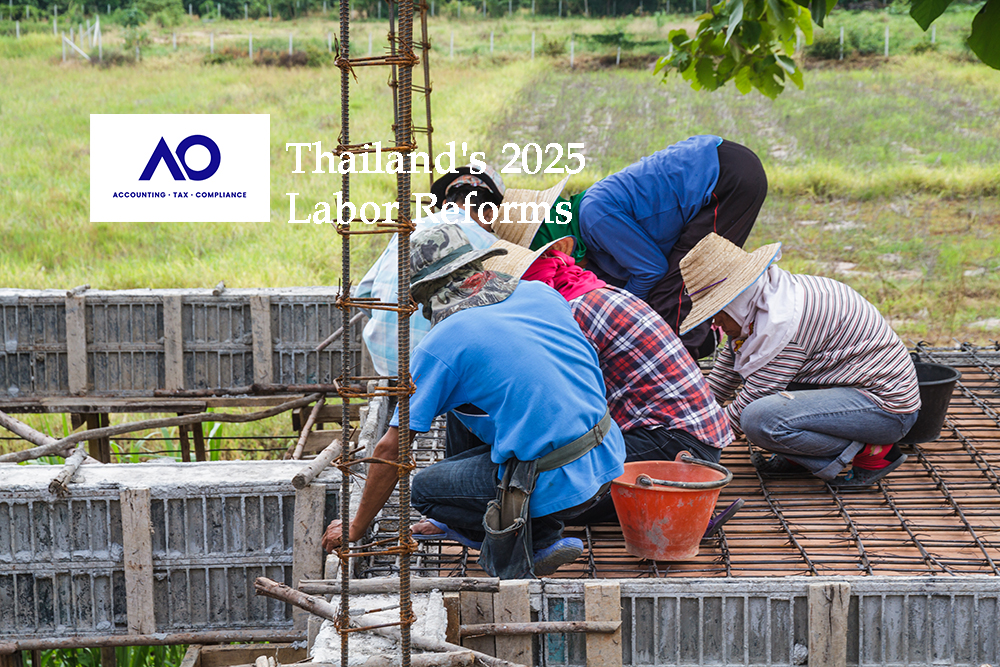
Thailand is set to implement significant labor reforms in 2025, introducing the Employee Welfare Fund and a revised minimum wage structure, among other changes, as part of the government’s commitment to protect workers. These initiatives aim to enhance worker welfare, improve financial security, and maintain the country’s economic competitiveness. However, with these reforms come new compliance obligations for employers and increased rights for employees.
To ensure a smooth transition, both employers and employees must understand these changes, their implications, and how to remain compliant with the new labour and social regulations. This guide provides an overview of Thailand’s labor law updates and how businesses can effectively navigate them.
Key Labor Law Changes in year 2025
1. Employee Welfare Fund (Effective October 2025)
One of the most notable changes is the Employee Welfare Fund, designed to provide financial security for employees in cases of job termination, death, or other critical circumstances. Employers with more than ten employees are required to participate unless they already provide comparable benefits, such as a provident fund.
Contribution Structure and Draft Rules
- From October 1, 2025, to September 30, 2030, both employers and employees must contribute 0.25% of wages to the Employee Welfare Fund
- From October 1, 2030, onwards, the contribution rate will increase to 0.5%.
- Contributions must be submitted by the 15th of the following month. Late or missed payments will incur a 5% surcharge per month.

Impact on Employers
- Increased Administrative Responsibilities: Businesses must calculate, deduct, and remit contributions accurately.
- Financial Adjustments: Companies need to budget for the new payroll deductions.
- Legal Compliance: Employers failing to comply may face penalties and reputational risks.
Impact on Employees
- Financial Security: Workers gain a safety net in case of job loss or unforeseen events.
- Greater Transparency: Employees must stay informed about their rights under the fund.
2. Revised Minimum Wage Structure (Effective January 1, 2025)
To address cost-of-living disparities, Thailand is restructuring its minimum wage system based on regional economic conditions:
- 400 Baht/day (US$11.55) – High-cost areas like Phuket, Chonburi, and Koh Samui.
- 380 Baht/day (US$10.97) – Muang District (Chiang Mai) and Hat Yai (Songkhla).
- 372 Baht/day (US$10.74) – Bangkok and surrounding provinces.
- 337 Baht/day (US$9.73) – Southernmost provinces, including Narathiwat and Yala.
Implications for Employers
- Higher Payroll Costs: Especially for labor-intensive sectors like tourism and manufacturing.
- Employee Satisfaction & Productivity: Higher wages can boost morale and efficiency, leading to improved productivity among domestic workers.
- Regulatory Compliance: Companies must adjust payroll structures and work permits to align with new rates set by the minister of labour.
How AO Legal Team Can Help
Navigating Thailand’s evolving labor laws can be complex, and non-compliance can lead to financial penalties and reputational damage. AO offers expert guidance on ensuring compliance with the latest labor regulations while fostering a fair and productive work environment.
Our team can assist with:
- Payroll Adjustments and Compliance: Ensuring salary structures meet new wage regulations is essential for employers looking ahead to 2025.
- Employee Welfare Fund Management: Helping businesses implement seamless contribution processes.
- Termination and Dispute Resolution: Advising on legal best practices to minimize risks of unfair dismissal claims.
By partnering with AO, both employers and employees can ensure a smooth transition into Thailand’s 2025 labor reforms. Let us help you stay compliant and build a strong, legally sound workplace where both businesses and employees thrive.
FAQs About Thailand’s Labor Reforms for 2025
Q: What are the key changes expected in Thailand’s labor codes in 2025?
A: The key changes in the labor codes for 2025 include enhanced protection for workers, especially informal workers and gig and platform workers, improved labor standards, and measures to streamline the implementation of these codes to better align with international labor practices.
Q: How will the minimum wage be affected by the labor reforms in 2025?
A: The minimum wage is expected to be reviewed and potentially increased as part of the labor reforms, with the aim to better support workers and reflect the cost of living adjustments in 2025.
Q: What provisions will be made for social security under the new policies?
A: The new policies will likely include expanded access to social security benefits for all workers, including domestic and informal workers, ensuring they receive adequate protection and support from the social security system.
Q: How do the labor reforms impact gig workers in Thailand?
A: The labor reforms are set to provide greater protections for gig workers, including regulations that govern working conditions, rights to fair wages, and access to social security benefits, helping to improve their overall workforce stability.
Q: What are the implications of the recent news regarding labor standards?
A: The recent news indicates that the Ministry of Labour is committed to enhancing labor standards, which will lead to improved working conditions and rights for all workers, particularly those in vulnerable employment situations.
Q: When will the new labor policies take effect?
A: The new labor policies are expected to be implemented starting in January 2025, coinciding with the major reforms outlined by the Ministry of Labour.
Q: How will the reforms address labor shortages in specific industries?
A: The reforms aim to address labor shortages by improving working conditions and benefits, which may attract more individuals into the labor market, and through initiatives that support skill development and workforce training.
Q: What role do workers’ representatives play in the new labor reforms?
A: Workers’ representatives will have a significant role in the new labor reforms by providing a voice for employees in discussions regarding labor codes, standards, and the implementation of social security measures, ensuring workers’ rights are protected.
Q: How will the budget for 2025 support the labor reforms?
A: The budget for 2025 will allocate funds to support the implementation of the labor reforms, including investments in the social security system and initiatives aimed at enhancing labor standards and protecting workers’ rights.
Q: What should employers do to prepare for the upcoming labor reforms?
A: Employers should familiarize themselves with the draft laws and new policies, assess their current practices against the expected changes, and plan for adjustments in compliance with the updated labor codes and standards coming in 2025.